
Weak Signal Repairs
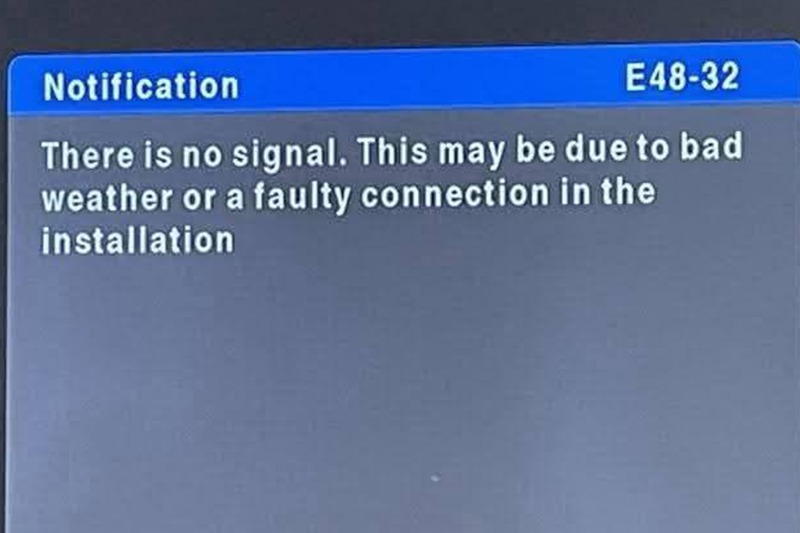
A 'weak signal' on DSTV usually shows up as pixelation in light rain, random channel dropouts, missing HD channels or frequent E48-32 errors during cloudy weather. The cause is almost always recoverable — we just need the right diagnosis.
What Usually Causes This Problem
Most cases trace back to one of the following root causes. Our technicians diagnose with a signal meter and the right diagnostic tools on every callout.
Dish alignment slightly off
Even a 1° drift loses HD transponders first. We realign with a signal meter.
Ageing LNB
LNBs degrade gradually over 8-12 years. Signal margin drops by a dB or two each year until pixelation starts.
Cable signal loss
Long coax runs lose signal per metre. Old or substandard cable loses more. We test continuity and replace where needed.
Wrong LNB skew
Skew angle directly affects signal quality on certain transponders. We verify and adjust during the visit.
Dish too small for marginal areas
Very heavy tree cover or far-from-Joburg locations sometimes benefit from a 90cm or 120cm dish.
Corroded outdoor connectors
F-connectors corrode over years of Highveld sun and rain. We re-crimp and weatherproof.
Weak signal is a different problem to no signal
A complete signal loss is obvious. A weak signal is the more expensive problem, because it hides: the picture works most of the time, breaks up during the big match, recovers, and everyone blames DStv.
The tell-tale symptoms are pixelation and blocking, sound that drops for a second or two, channels that fail while others work, and a setup that is fine in winter and unreliable in summer.
Strength versus quality — the number people read wrong
Your decoder's signal screen shows two readings. Strength is roughly how much energy is arriving. Quality is how cleanly the receiver can decode it. Quality is the one that determines whether you get a picture.
High strength with poor quality is the classic weak-signal signature, and it usually means a degraded LNB, water in the cable, a corroded connector, or interference — not a dish pointing in the wrong direction. Chasing alignment when quality is the problem is why some households get realigned twice a year and never actually fixed.
Why it gets worse in summer
- Foliage. A tree that was bare in July fills out by October. Leaves and especially wet leaves attenuate the signal badly. This is the single most common seasonal cause we see in Pretoria's older suburbs.
- Heat and moisture. Marginal connectors fail faster in the summer humidity and thermal cycling.
- Storms. Rain fade turns a marginal signal into no signal. A properly performing installation rides out light rain; a marginal one does not.
The three fixes that actually hold
- Replace a degraded LNB. Typical service life is eight to twelve years, and performance falls off gradually rather than all at once.
- Cut back and re-terminate water-damaged cable. Water tracks down the inner conductor from the dish-end connector and corrodes it. Taping over it does nothing.
- Move or raise the dish. If the problem is an obstruction, no component change will fix it. Height or a different mounting position will.
If your picture pixelates before a big match, get it looked at beforehand — that is the week everyone else calls too.
Common questions
That is a weak or marginal signal rather than a total loss. The most common causes are a degrading LNB, water in the coaxial cable, a corroded connector, or an obstruction such as tree growth between the dish and the satellite.
Strength is roughly how much signal energy reaches the decoder; quality is how cleanly it can be decoded. Quality is what determines whether you get a picture. High strength with low quality usually points to a failing LNB, water-damaged cable or interference rather than alignment.
Usually foliage. Trees that were bare in winter fill out in spring, and leaves — especially wet leaves — attenuate the satellite signal. Summer storms and humidity also push a marginal installation over the edge.
Rarely. A larger dish helps at the margins, but if the cause is a degraded LNB, a water-damaged cable or an obstruction, a bigger dish will not fix it. Diagnosing the actual cause with a signal meter is cheaper than guessing.
Related pages
Related DSTV Solutions
See our FAQ page for 50+ answers, or contact us for a same-day quote.